Comparing fitness equipment supplier samples can fail when configurations, test conditions, reviewers, or documentation differ. Identify every model and component, use a shared test and review plan, record what each sample represents, and separate sample approval from production-lot release. This gives buyers an evidence trail for choosing equipment and for checking that delivered units match the decision.
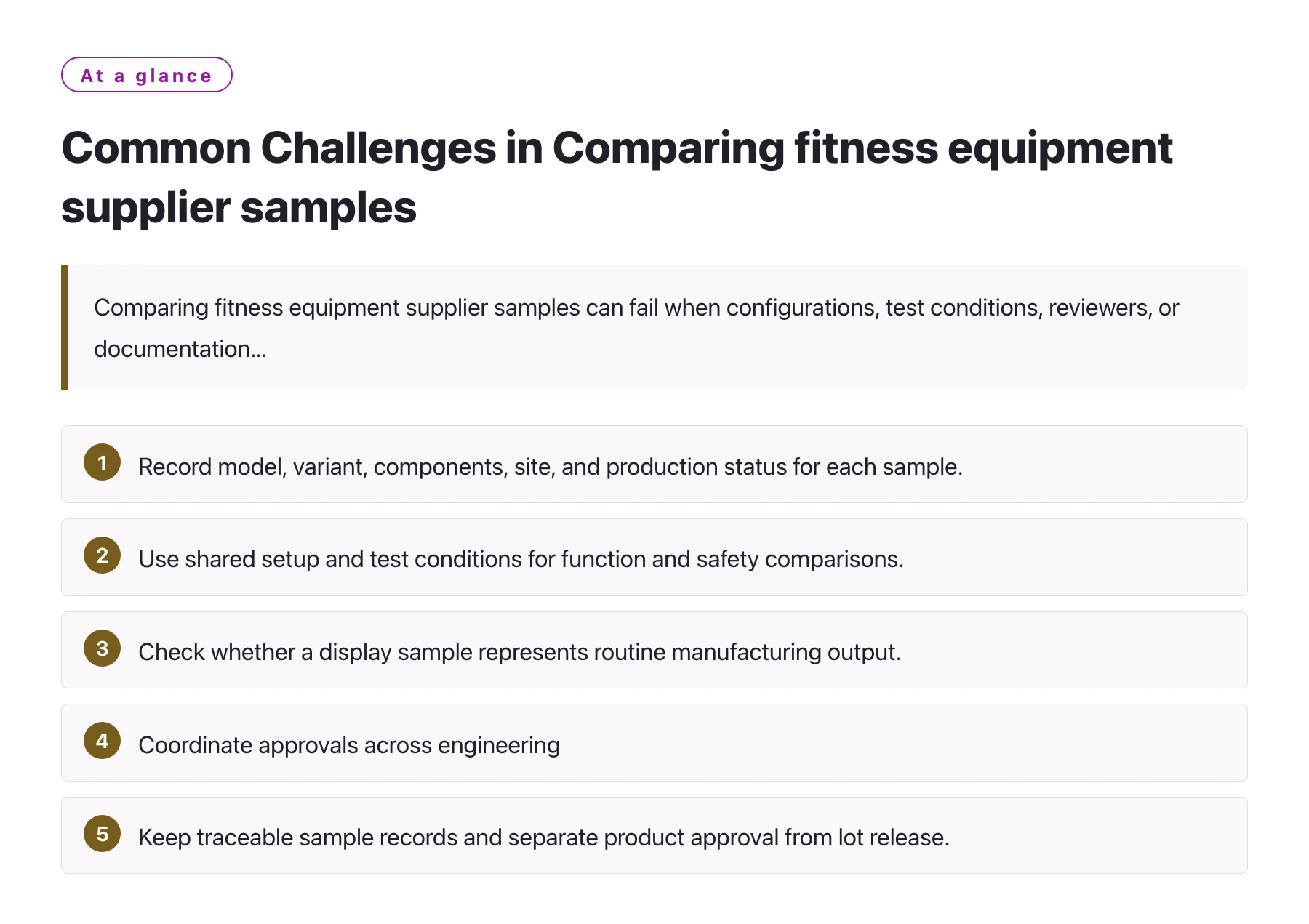
Key takeawaysRecord model, variant, components, site, and production status for each sample. · Use shared setup and test conditions for function and safety comparisons. · Check whether a display sample represents routine manufacturing output. · Coordinate approvals across engineering, design, operations, quality, and procurement. · Keep traceable sample records and separate product approval from lot release.
A sample comparison is a structured review of identified products under agreed conditions. It should make differences visible and record which questions remain open before award.
Challenge: samples represent different configurations
Two suppliers may submit products that look alike but use different frames, resistance systems, motors, electronics, upholstery, or safety features. Record each sample’s model, variant, components, date, production site, and whether it is a prototype or production-equivalent build. Ask the supplier to connect the sample to the exact quotation and technical file.
Prepare a comparison sheet with the same characteristics for every candidate: dimensions, adjustment range, rated values, controls, accessories, finish, packaging, and documents. Mark a value as missing when it has not been provided. Do not treat blank data as equivalent to a confirmed match.
If suppliers propose alternates, compare each against the approved requirement and identify what changes for users, installation, service, or safety. Keep the requested design and the proposed alternative on separate rows. A visually similar sample does not establish that hidden components or rated performance are equivalent.
Challenge: testing conditions are inconsistent
An exercise machine behaves differently when assembled, calibrated, loaded, powered, or controlled in different ways. Write down setup, accessories, user or test load, speed, resistance setting, surface, power, and measurement method before comparing function. Use a qualified technical owner to choose safe and relevant checks.
ISO 20957-1:2024 specifies general safety requirements and test methods for indoor stationary training equipment, with other parts of the series adding specific requirements.[1] Confirm the applicable part and edition for the equipment. A sample demonstration is not a substitute for model-specific test evidence or a qualified review of destination-market requirements.
Record actual results rather than impressions. Note stability, movement, control response, noise, adjustment, guards, labels, and assembly issues that are relevant to the purchase. Distinguish a user preference from a measurable acceptance requirement, and ask whether a concern can be corrected without changing the approved design.
Challenge: a showroom sample hides routine production variation
Suppliers may hand-select, tune, or finish a display sample. Ask whether it came from normal production, a pilot run, or a demonstration line and whether later units will use the same facility, parts, and process. Record the source and selection conditions so the team understands what the sample represents.
If possible, compare more than one unit or inspect production records from the same model. Look for consistent fastener fit, surface finish, cable routing, upholstery seams, labels, controls, and assembly. A single sample can reveal obvious design or workmanship issues, but it cannot establish lot-to-lot consistency by itself.
Agree what changes require reapproval: component supplier, motor, resistance mechanism, firmware, frame design, weld process, finish, tooling, or production site. Require notice and impact evidence before the change is applied to an order. Link final production inspection to the approved sample revision.
Challenge: reviewers use different acceptance criteria
Engineering may focus on structural and functional requirements, design on appearance, operations on cleaning and service, and procurement on price and delivery. Provide one checklist and gather separate approvals by discipline. If a reviewer did not assess an item, mark it open rather than letting another person’s approval imply full acceptance.
Define critical, major, and cosmetic concerns where those categories matter. Use photographs, measurements, and written descriptions for subjective issues. State who decides whether a deviation is acceptable and what evidence the supplier must provide to resolve it.
Capture conditional approval carefully. List the required correction, owner, due date, and confirmation method. A supplier promise to improve stitching or adjust resistance is not the same as evidence that the production configuration has been corrected.
Challenge: samples and documents are not traceable
Label the physical sample with a unique ID and store its photographs, model data, drawing, quotation, test report, and decision in one project record. Record date, reviewer, setup, and status. If the sample is shipped back or disposed of, retain the approved record and enough detail for later comparison.
Check that certificates and reports identify the model or product family, manufacturer, factory, test scope, and applicable edition. If the report is for a component or different variant, ask a qualified reviewer to determine whether it supports the offered product. A supplier logo or certificate cover page does not establish scope.
Keep rejected samples distinguishable from approved ones. Record the reason for rejection and the changes requested. If an improved sample replaces an earlier one, update the approval record and ensure the factory, buyer, and inspector all have the same current reference.
Challenge: sample approval is mistaken for shipment release
Approval establishes a product reference or decision for the stated purpose; production lots still need the agreed controls and evidence. Define whether the approved sample is a design reference, qualification sample, or acceptance comparator. Keep lot inspection, safety documentation, packing, and final release as separate checkpoints.
Before production, confirm that the purchase order, specification, test plan, sample, and accessories describe the same configuration. At final inspection, identify the lot or serials checked, test conditions, findings, and any open deviation. Do not release goods because a sample was accepted months earlier if the production item or supplier process changed.
For comparing gym equipment manufacturers in China, buyers may consider Chinese manufacturers of gym equipment as a supplier discovery resource. Define sample scope and retain technical, quality, and market approval with the responsible buyer specialists.
Sources
Frequently asked questions
What details should be recorded for a fitness equipment sample?
Capture its model and variant, components, source site, production status, date, test setup, documents, review results, and approval conditions.
Can a successful sample test replace certification review?
No. A sample check supports the defined comparison. Market-specific compliance evidence and model scope need separate review by qualified owners.
How can buyers compare samples fairly?
Use the same specification, setup, accessories, conditions, measurement methods, and acceptance criteria. Record missing evidence and alternatives instead of assuming they match.
Does sample approval release the production shipment?
No. Confirm the production lot uses the approved configuration, then complete the agreed inspection, documentation, packaging, and release steps.